
David Lorenz · 10 November 2026
Patterns in Shared Knowledge Networks Among Solo Digital Creators Adapting to Shifting Content Discovery Rules
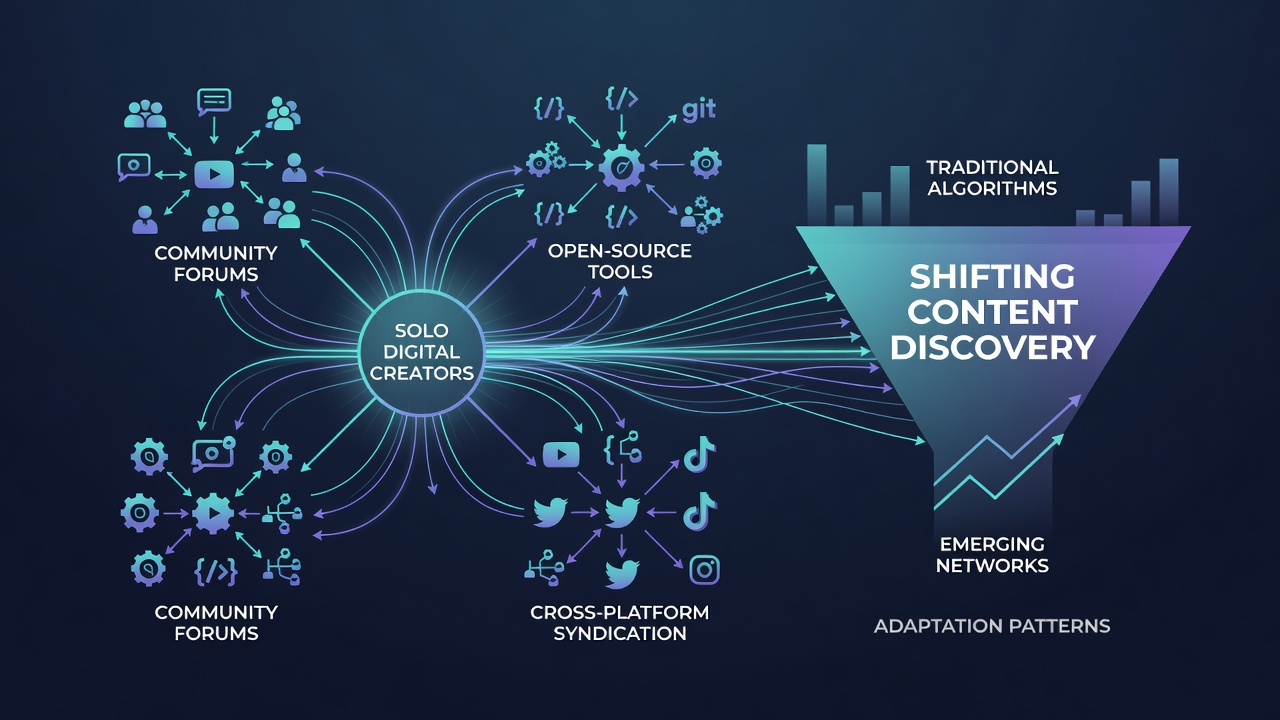
Shared knowledge networks have emerged as central mechanisms for solo digital creators who must respond to frequent alterations in content discovery algorithms across search engines and social platforms, and these networks often operate through private forums, collaborative documents, and encrypted messaging groups where participants exchange data on ranking factors and visibility metrics. Researchers tracking these groups note that participation rates increased notably during periods of policy flux, such as the series of updates rolled out in November 2026 by major platforms adjusting their recommendation systems to prioritize original reporting over aggregated summaries.
Network Structures and Participation Patterns
Independent operators frequently form tiered access systems within these networks, with entry-level channels offering basic trend reports while deeper tiers require demonstrated contributions like case studies from individual sites that maintained traffic stability after specific algorithm revisions. Data collected by academic observers at institutions including the University of Toronto shows that creators who maintain consistent engagement across multiple network layers achieve higher average session durations on their own properties compared with those relying solely on public documentation. These structures rely on voluntary moderation by experienced participants who compile summaries of regulatory filings from bodies such as the Australian Competition and Consumer Commission and the Canadian Radio-television and Telecommunications Commission, thereby reducing duplication of research efforts among members.
Adaptation Mechanisms During Rule Shifts
When platforms announce modifications to content indexing criteria, network members rapidly circulate annotated changelogs and A/B test results from their own experiments, allowing others to implement adjustments without redundant trial periods. One documented pattern involves the creation of shared repositories that categorize past changes by region and content type, enabling quick cross-referencing when a new policy targets, for example, user-generated video metadata or long-form text optimization. Figures from industry reports indicate that groups employing version-controlled documents experienced fewer prolonged traffic dips during the November 2026 wave of updates than isolated operators who monitored announcements independently.
Geographic and Thematic Variations in Knowledge Exchange
Networks often segment discussions by language and regulatory jurisdiction to address distinct compliance requirements, with European participants referencing Digital Services Act implementation timelines alongside North American creators who focus on Federal Trade Commission guidelines for disclosure practices. Thematic clusters form around topics such as metadata standardization and cross-platform syndication tactics, and members contribute anonymized performance data that reveals correlations between specific discovery features and referral patterns. Studies published through the OECD Directorate for Science, Technology and Innovation highlight how these segmented exchanges produce measurable improvements in cross-border content reach when participants align their outputs with jurisdiction-specific indexing priorities.
Documentation and Feedback Loops
Contributors maintain running archives of successful and unsuccessful adaptation attempts, tagging entries according to platform, content format, and time since the most recent rule change. This practice creates searchable histories that new members can query to identify recurring signals, such as shifts in crawl frequency or emphasis on engagement velocity metrics. Observers have recorded instances where these archives directly informed rapid responses to the November 2026 adjustments, particularly among creators who combined repository insights with real-time alerts shared within the networks.
Conclusion
Patterns observed across these networks demonstrate consistent reliance on distributed documentation and segmented collaboration to manage visibility challenges arising from evolving content discovery protocols. Continued monitoring by research organizations suggests that such systems will persist as primary resources for solo operators seeking timely, granular information without centralized coordination.